Human Performance
Neuroarchitecture
Neuroarchitecture studies how the built environment shapes stress, attention and emotion. We pair it with a before-and-after measurement system. That turns wellbeing into data a board can read.

Is this your case?
- Our board wants evidence before approving any investment in our headquarters.
- We keep hearing about neuroarchitecture and cannot tell whether it is science or marketing.
- HR reports fatigue and turnover, and we suspect the space plays a part.
- We have ESG commitments to our parent company and need reportable indicators from the workplace.
How it works


Measure
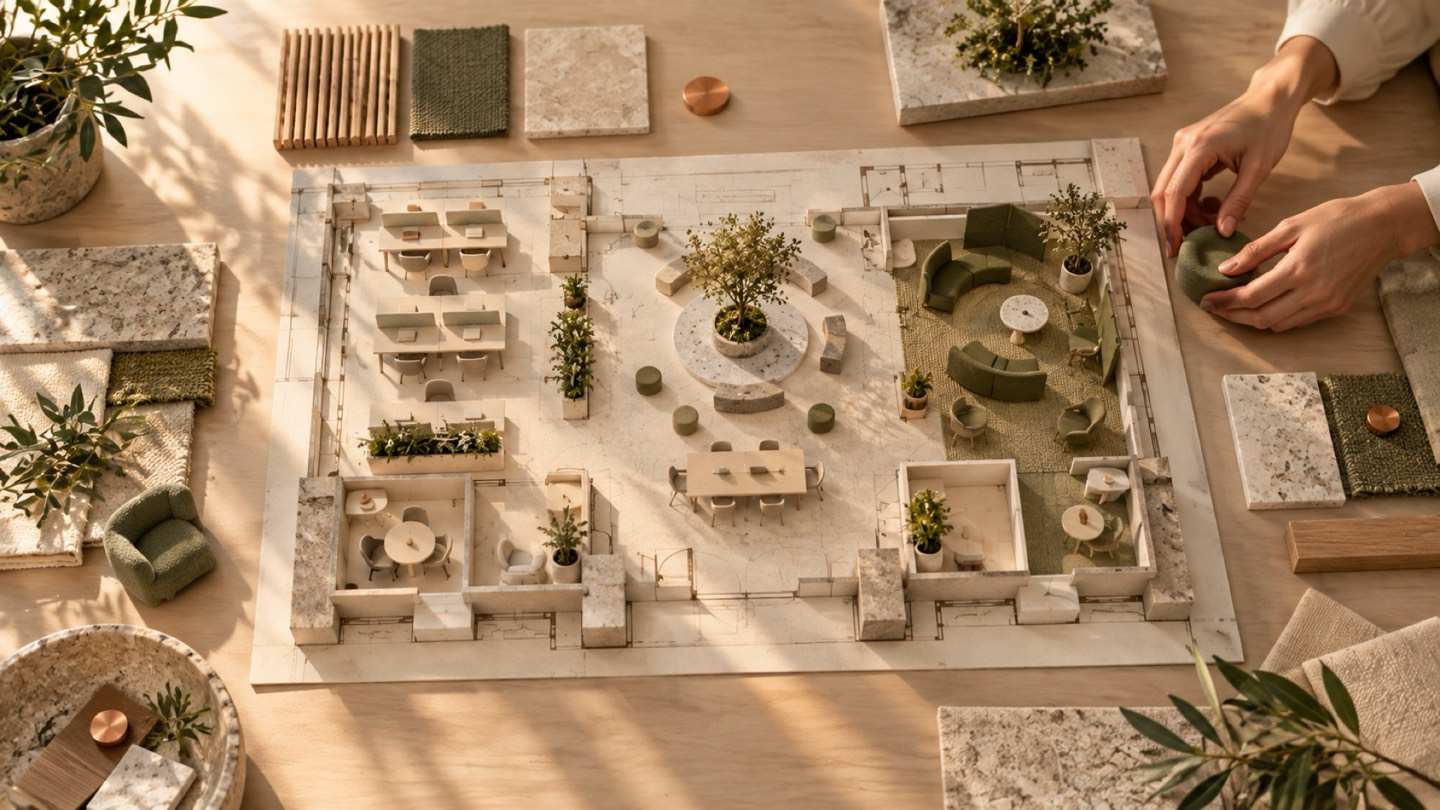
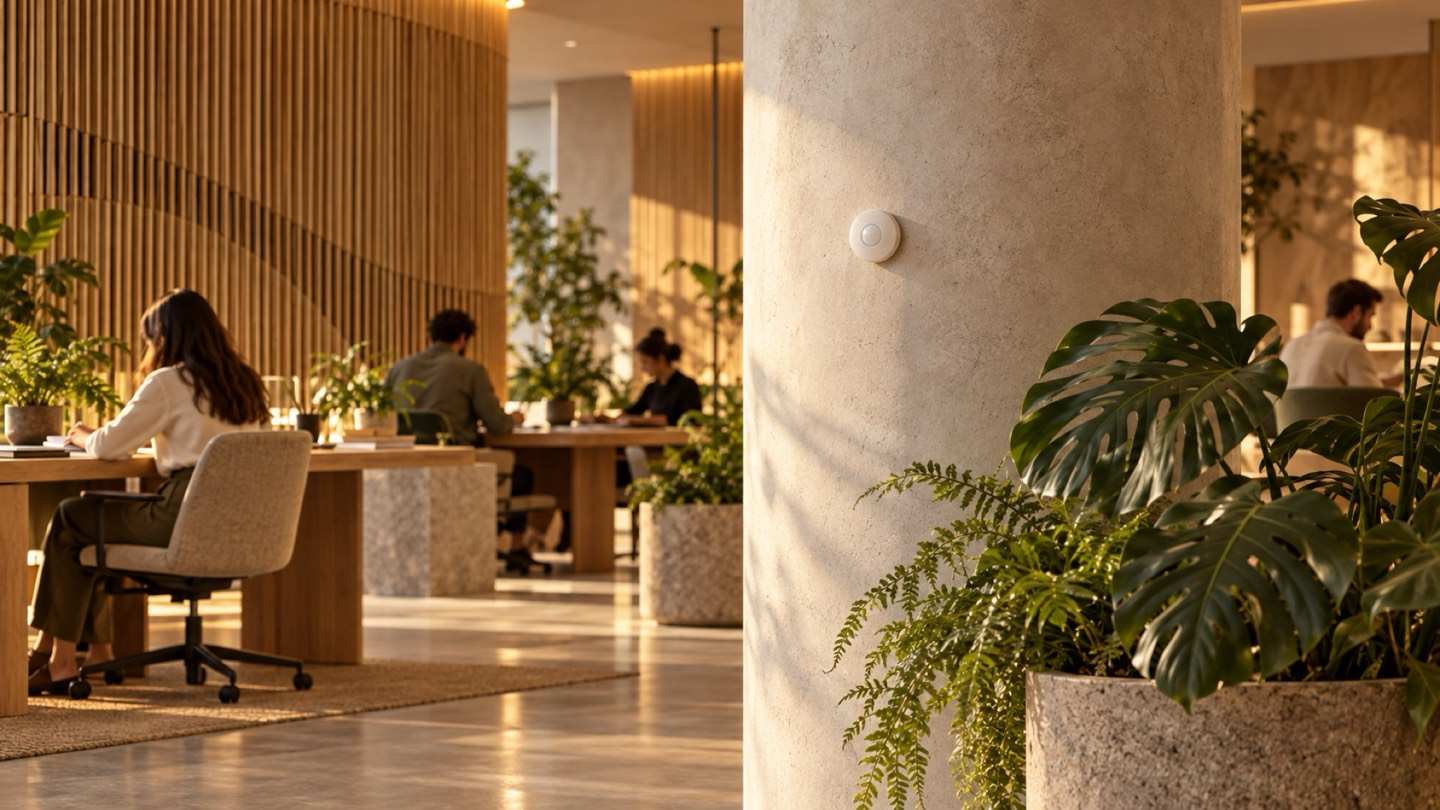
The Workplace Performance Audit records light, noise, air, temperature, real occupancy and perception. That becomes the baseline.
Understand
We cross-reference culture, brand, work modes and decision-makers. The outcome is three performance hypotheses.
Design for mental states
We zone by cognitive mode, not by department. Each design response serves a state your team needs.
Measure again
We repeat the measurement at day 90, month 6 and month 12. Each indicator is compared with its own baseline.
Report to the board
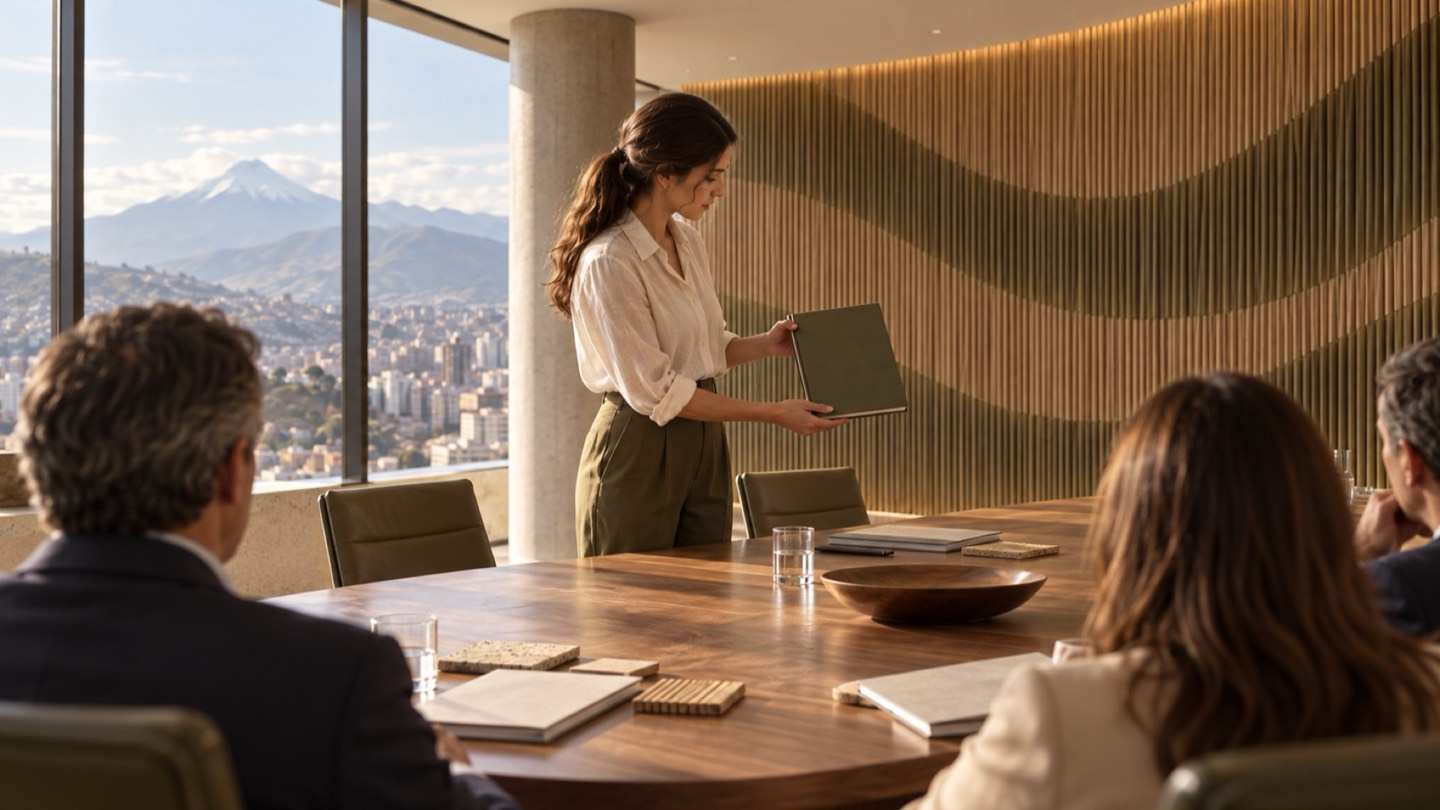
Results arrive in the Annual Spatial Impact Report. The return calculation follows the ROSE method, described under Method.
The essentials
Evidence and sources
We work with published frameworks, not hunches. ANFA bridges neuroscience and design. WELL sets criteria for light, air, sound, comfort and mind. Pallasmaa reminds us that architecture is lived through every sense. Kellert treats nature as a biological need. The Gensler Research Institute studies workplace experience and performance.
From mental state to space
Sustained attention: we shield it from noise and foot traffic with Deep Focus, prospect and refuge, and active silence. Less stress: biophilia, circadian light, Vital Refuges and Pods instead of flat light and confinement. Creative collaboration: a generous Agora with organic forms and flexible furniture. Belonging: your identity expressed in materials and routes. Energy: ventilation, visible stairs and routes that invite movement.
What we measure and how
Environment: sensors for temperature, humidity, CO₂, light and noise, before and after the intervention. People: anonymous surveys on wellbeing, focus and belonging, plus interviews with leaders. Use: real occupancy of each zone and Pod, with anonymous sensors and no cameras. Business: turnover, absenteeism, eNPS and energy use, from client data.
From data to return
The indicators feed the Return on Space (ROSE). Each component is defined with you during the Audit and measured against its baseline. The formula and its limits are explained under Method.
What you receive
- A baseline built from environmental sensors, anonymous surveys, usage data and business data.
- Three performance hypotheses tied to your culture and work modes.
- Zoning by cognitive mode, with the design response for each target state.
- A Human Performance Dashboard with indicators and targets set with your team.
- An Annual Spatial Impact Report, presented to the board.

Frequently asked questions
What is neuroarchitecture?
It is the study of how the built environment shapes stress, attention and emotion. ANFA, the Academy of Neuroscience for Architecture, is the reference bridge between neuroscience and design.
Is neuroarchitecture science or marketing?
We work with published frameworks: ANFA, the WELL Building Standard, Stephen Kellert and the Gensler Research Institute. We do not promise figures. The evidence supports the approach, and we verify it in your team against a baseline.
Do you use cameras to measure how the space is used?
No. Occupancy in each zone is measured with anonymous sensors, never cameras. Wellbeing surveys are anonymous too.
What company data do you need?
Turnover, absenteeism, eNPS and energy use, always from data you provide. Indicators and targets are set with your team during the Audit.
Can you tell me how much stress will drop in my team?
Not before measuring. No number is promised without a baseline. We set targets with your team and verify them at day 90, month 6 and month 12.

Your company's performance is decided in its space.
It all starts with a Workplace Performance Audit: we measure before we give an opinion.